
Innovative Solutions for the Construction Industry: The Foundation of Structural Durability
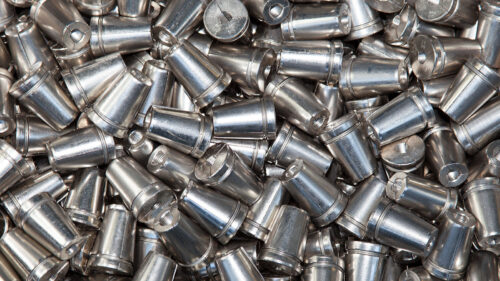 Modern construction is unimaginable without prestressed concrete technology, which provides structures with exceptional strength, durability, and resistance to high loads. At the core of this technology lies the precise and reliable tensioning of reinforcing material. The central component responsible for securing the achieved tension is the prestressing anchor wedge (also known as prestressing chuck). These high-precision components play a crucial role in ensuring the safety and economic efficiency of any precast concrete production facility, directly influencing the quality of the final product.
Technological Standard: How Anchor Grips Ensure Reliable Prestressing
The working principle of anchor grips, despite its apparent simplicity, requires absolute precision. Essentially, it is a tool designed for gripping or coupling steel wire, strands, or multi-wire tendons. Structurally, the product consists of a housing and wedge-shaped jaws. During tensioning, the wedges bite into the reinforcement, securely locking it and preserving the applied force. Precast concrete plants use this tool repeatedly, highlighting its importance as an indispensable component in the production cycle. It is the reliable fixation provided by prestressing wedges that makes it possible to achieve the calculated strength parameters of the structure.
Practical Use of PAUL Equipment: From Precast Plants to Large Construction Projects
PAUL offers a wide range of anchor grips that meet the needs of manufacturers worldwide. PAUL’s prestressing anchors are used at virtually all stages of prestressed concrete production. Three main models are distinguished, each with its own application specifics:
- Open Type “A” — the strongest and most widely used, installed on the stressing side of the bed. Their design is simple to operate and maintain, and when used with certain types of jacks, they allow losses due to strand draw-in to be reduced to zero.
- Closed Type “F” — typically used on the non-stressing end of the bed. They allow faster installation and eliminate the risk of wedge loss.
- Coupling Type “K” — used for connecting reinforcing material of identical or different diameters, helping optimize steel consumption and reduce production waste.
Flawless Quality and Cost Efficiency: Why Professionals Choose PAUL
Selecting reliable wedge anchors for prestressed concrete is an investment in uninterrupted production. PAUL guarantees compliance with the highest standards of safety and efficiency. Housings are made from high-strength alloy steel, undergo ultrasonic crack testing, and are subject to strict dimensional accuracy control. The wedges are made from galvanized steel and are subjected to thorough heat treatment and computerized hardness and tooth-geometry control. This attention to detail ensures:
- Exceptional wear resistance and long service life during repeated use.
- Minimal strand draw-in losses, which is critical for maintaining the required prestressing force.
- Resistance to deformation under extreme loads.
Guaranteed Reliability for Your Production: Choose TDM Extruder
To achieve consistently high product quality, components must undergo the strictest testing. PAUL’s prestressing wedges are the global benchmark of reliability.
TDM Extruder (TDM-Engineering Oy) is the official supplier of these solutions, guaranteeing original quality, exact technical compliance, and fast delivery. We offer not just equipment — but confidence in the safety and economic efficiency of your production.
Ensure the long-term durability of your structures with PAUL anchor grips — high-strength, cost-efficient, and rigorously tested components from a market leader, available through TDM Extruder.
Contact us today for consultation and ordering — quality does not tolerate compromise.
Frequently Asked Questions: Key Facts About Prestressing Wedges
- What are the main components of prestressing wedges?
A wedge and wedge-shaped jaws.
- What material is used for PAUL anchor grip housings?
High-strength alloy steel that undergoes ultrasonic crack testing.
- What is the primary purpose of anchor grips in concrete production?
To fix or couple reinforcing material (wire, strands) to preserve the prestressing force.
- What advantage do Open Type “A” anchors provide when used with mono-strand jacks with hydraulic locking?
Strand draw-in losses are reduced to zero.
- What are Type “K” coupling sleeves used for?
For joining wire or strands of identical or different diameters to reduce steel waste.
- What must be done after each use of wedges?
They must be thoroughly cleaned according to the manufacturer’s recommendations.