
Logistics of the Future: How Addressable Concrete distribution system Transforms Precast Production Economics
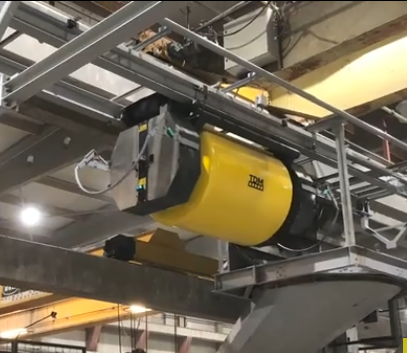 The modern precast concrete industry demands not only high-quality components but also flawless internal logistics. A plant’s efficiency directly depends on the speed and precision with which concrete moves from the batching plant to the mould. This is where Concrete distribution system for Precast Production become the key tool that turns chaotic material flow into a coordinated mechanism, eliminating downtime and material loss. Implementing an automated transport system is a strategic step toward reducing the cost of each cubic meter of finished precast products.
Engineering Fundamentals: How Shuttle-Based Concrete Delivery Works
Technically, the system is a high-tech complex connecting the Concrete Batching Plant with the forming stations. Its core component is a self-propelled automated bucket — a shuttle that moves along dedicated rail tracks. Engineers at TDM have developed a design built for intensive industrial use: the shuttle volume ranges from 1000 to 3000 liters of compacted concrete, ensuring supply for even the largest production lines.
A key focus of the technology is preserving the concrete’s properties during transport. The shuttle is equipped with a vibration device that maintains the required consistency, preventing segregation until discharge. The bottom discharge gate is operated by a dedicated actuator, ensuring clean and controlled unloading. The entire system is powered through durable power rails.
Areas of Application: From Extruders to Vibropresses
In practice, Concrete distribution system serve as a universal link within the plant. They are indispensable in production halls using extruders for hollow-core slabs, slipform lines, or stationary vibropresses. Rail routes can include complex configurations with turns and elevation changes, allowing integration into an existing factory layout without major reconstruction. Operators can control the system manually or switch to fully automatic mode, directing concrete precisely where it is needed.
Key Advantages: Why Plants Switch to Automation
Factory owners choose automation not for trends but for measurable economic results. Addressable Concrete distribution system provide four core advantages:
- Precise dosing with zero material loss. Automated batching ensures strict adherence to the required mix design and volume, eliminating human error and costly overconsumption of concrete.
- Consistent concrete quality. Fast delivery combined with vibration-assisted consistency control prevents stiffening or segregation during transport. Forms receive homogeneous concrete, improving strength and surface finish.
- Workforce optimization and safety. Automated shuttles reduce the number of workers performing heavy and hazardous tasks. Fewer people in load‑handling zones means improved safety and lower labor costs.
- Architectural flexibility. The system does not require structural changes: rail routes can be designed around turns, slopes, and existing equipment, connecting the CBP and forming stations via the most efficient path.
Another essential economic factor is reduced operating costs. The system requires minimal maintenance, and process automation reduces the number of low‑skill workers needed for material handling. Fewer personnel in hazardous areas also significantly increases workplace safety.
Technology Partnership for Your Business
The market demands greater speed and higher quality, and outdated logistics methods can no longer provide a competitive advantage. A properly configured Addressable Concrete Delivery System is an investment in long-term stability. We offer reliable TDM Engineering solutions that ensure uninterrupted supply of high‑quality concrete to your forming lines. Contact our specialists today to design a modernization project and reach new levels of efficiency.
FAQ: Addressable Concrete Delivery Systems for Precast Production
- What concrete volume can one shuttle transport?
The system is designed to carry 1000–3000 liters of compacted concrete per cycle, covering the needs of high‑output production lines. - Does the mix segregate during transport?
No. The shuttle is equipped with a vibration motor that maintains required consistency and mobility, preventing segregation. - Can the system be installed in a plant with a complex layout?
Yes. Rail routes are engineered according to building constraints. The track can include turns and slopes, allowing installation without major reconstruction. - What power is required for operation?
Power is supplied through safe conductor rails. - How is the system controlled?
The system supports two modes: manual (operator‑controlled) and fully automatic, where concrete is delivered from the CBP to the required station on request.