
Formwork Fixing Magnets: An Innovative Solution for Accelerating Precast Concrete Production
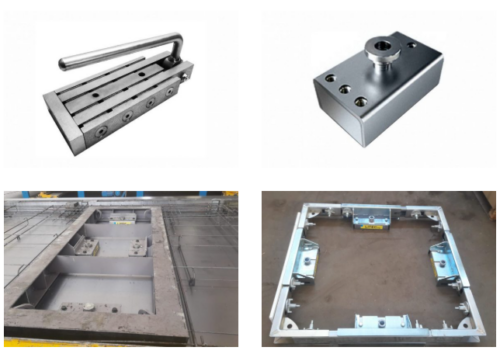 In the modern precast concrete industry, the speed and accuracy of mould assembly directly determine plant profitability.
Traditional methods of fixing side forms are gradually being replaced by advanced magnetic clamping systems. The use of specialized equipment such as formwork fixing magnets allows precast plants to fundamentally improve workspace organization, minimize manual labor, and eliminate damage to steel pallets and casting tables.
Technological Concept of Magnetic Fixation and Operating Principle of PAUL Systems
The technology is based on high-performance neodymium magnetic blocks enclosed in a durable steel housing. Magnetic formwork systems are designed for reliable fixation of formwork profiles on steel tilting tables or stationary casting beds. The primary function of formwork fixing magnets is to create a rigid connection without welding or bolted fastening.
Operation is straightforward: the magnetic unit is positioned tightly against the formwork side profile and activated by pressing the top button or lever. Clamping force varies depending on the model, reaching several tons, ensuring complete stability of the mould even under intensive vibration during concrete pouring and compaction. For deactivation, a dedicated eccentric release lever is used to lift the magnetic block and safely break the magnetic circuit.
Applications of Magnetic Systems in Precast Production
Magnetic clamping systems are not limited to standard elements.
The versatility of PAUL systems enables application in various production scenarios:
- Manufacturing of flat elements – wall panels, floor slabs, and partitions.
- Production of complex architectural shapes – compact magnetic blocks can be combined with steel or timber formwork of any configuration.
- Creation of openings – installation of magnetic inserts for forming window and door recesses within the main mould.
- Operation on tilting tables – ideal for automated pallet circulation systems.
These solutions are suitable both for large-scale precast plants and for smaller workshops seeking cost optimization.
Key Advantages of PAUL Magnetic Systems
Transitioning to professional formwork equipment provides measurable economic and operational benefits. By choosing formwork fixing magnets, you gain:
- Protection of expensive equipment – no welding to pallets eliminates steel deformation and extends the service life of casting tables.
- High geometric accuracy – rigid fixation prevents formwork displacement under concrete pressure, reducing rejection rates to a minimum.
- Reduced changeover time – installation and removal of magnetic systems is 3–4 times faster than threaded or bolted connections.
- Durability and reliability – steel housings protect magnetic elements from concrete slurry ingress and corrosion, ensuring long-term performance.
Expert Approach to Precast Plant Equipment Configuration
Production efficiency begins with selecting the right tools.
Magnetic formwork systems and specialized clamping devices from PAUL represent an investment in technological independence and product quality. By implementing modern magnetic formwork holders, you optimize labor costs and increase mould turnover rates.
We provide comprehensive solutions tailored to your production requirements.
Contact our specialists for detailed technical consultation and selection of the optimal fixation systems for your plant. Start modernizing your production today.
FAQ – Key Points About Magnetic Fixation
1. What is the holding force of PAUL magnetic boxes?
Standard models provide clamping forces from 450 kg to 2,100 kg and above. Selection depends on side form height and concrete load to ensure secure fixation without displacement.
2. Can magnets be used on concrete or wooden casting beds?
No. The technology operates exclusively on smooth steel surfaces such as pallets or tilting tables. Full metal contact is required to activate the magnetic field.
3. How can magnetic blocks be protected from concrete contamination?
The housing is made of stainless or galvanized steel for easy cleaning. For maximum protection, release agents are recommended, and direct contact of concrete with the activation button should be avoided.
4. What is the service life of neodymium magnets?
When operated within temperature limits (typically up to 80°C; higher for special series), magnetic loss does not exceed 1% over 10 years, making magnetic formwork holders a long-term investment.
5. Is special tooling required for operation?
Activation is performed manually by hand or foot pressure. Deactivation requires a steel release lever, allowing safe separation of the magnetic unit without damaging the system.