
Production technology for prestressed hollow-core slabs: Advanced Solutions for Concrete Plants
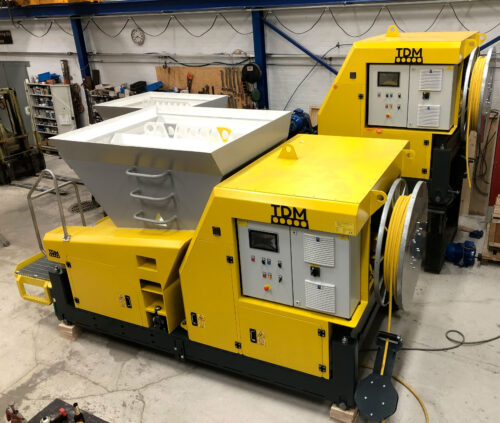 Modern civil and industrial construction requires materials that combine high load-bearing capacity, lightness, and cost-efficiency. The optimal solution for these challenges is the Production technology for prestressed hollow-core slabs, which allows for creating products with superior strength characteristics while significantly reducing the consumption of concrete and reinforcing steel. Implementing this method based on TDM Extruder equipment and Paul Maschinenfabrik systems opens new horizons of profitability and quality for precast concrete manufacturers.
Core Process and Operating Principles of High-Tech Equipment
The method is based on the use of extrusion machines that cast the product . The process begins with the preparation of casting beds, where high-strength steel wire or strands are laid. Using Paul hydraulic jacks, the reinforcement is tensioned—this is a key stage, as pre-stressing allows the slab to withstand massive deflection loads.
Next, the TDM extruder starts its operation. The machine moves along the track, forcing a dry concrete mix through the screw group under high pressure. A system of separate drives and a reciprocating compaction method guarantee maximum density of the concrete structure and perfect void geometry. After the concrete gains strength, the tension from the reinforcement is transferred to the product, completing the cycle governed by the Production technology for prestressed hollow-core slabs.
Practical Application of the Technology in Modern Manufacturing
This methodology is widely used in the construction of facilities with large spans, where using standard slabs is impossible or economically unjustifiable. On production sites, TDM equipment allows for the manufacturing of slabs with heights from 80 to 500 mm and widths up to 2.4 meters.
In practice, the Production technology for prestressed hollow-core slabs enables the rapid production of floor decks for:
- Multi-story residential complexes with open floor plans;
- Logistics centers and warehouse terminals;
- Shopping and entertainment centers;
- Industrial workshops with heavy machinery.
Due to process automation and high casting speeds (up to 3.5 m/min), plants can quickly adapt to customer requirements, producing slabs of the exact length needed for a specific project without being tied to standard mold sizes.
Technological Advantages and Benefits of Using PAUL Equipment
Integrating Paul Maschinenfabrik tensioning systems into the production cycle provides the enterprise with a range of critical advantages that directly affect the quality of the final product and overall business margins.
- Reference Tensioning Accuracy: The use of specialized jacks guarantees a strictly specified tensioning force for each strand, eliminating the risk of defects and cracks in the finished slab.
- High Reliability and Durability: German-made Paul equipment is designed for intensive operation in the aggressive conditions of concrete plants, maintaining performance characteristics for decades.
- Versatility and Flexibility: Systems are easily adapted to various types of reinforcing elements, allowing for the production of both thin partitions and massive load-bearing beams on a single line.
- Reduction of Production Costs: Optimizing the pre-stressing process reduces bed preparation time and minimizes the consumption of expensive steel, increasing the overall efficiency provided by the Production technology for prestressed hollow-core slabs.
Effective Solutions for Scaling Your Business
TDM Extruder offers more than just equipment; we provide comprehensive expertise in the field of precast concrete production. This technology is a proven way to increase your company’s competitiveness in the construction market. We provide full technical support, commissioning, and personnel training, ensuring consistently high quality of the manufactured products.
If you aim to automate production and reach a new level of quality, contact our experts today. We will help you select the optimal configuration of the extruder and tensioning systems for your production tasks.